BACKGROUND
OF THE INVENTION
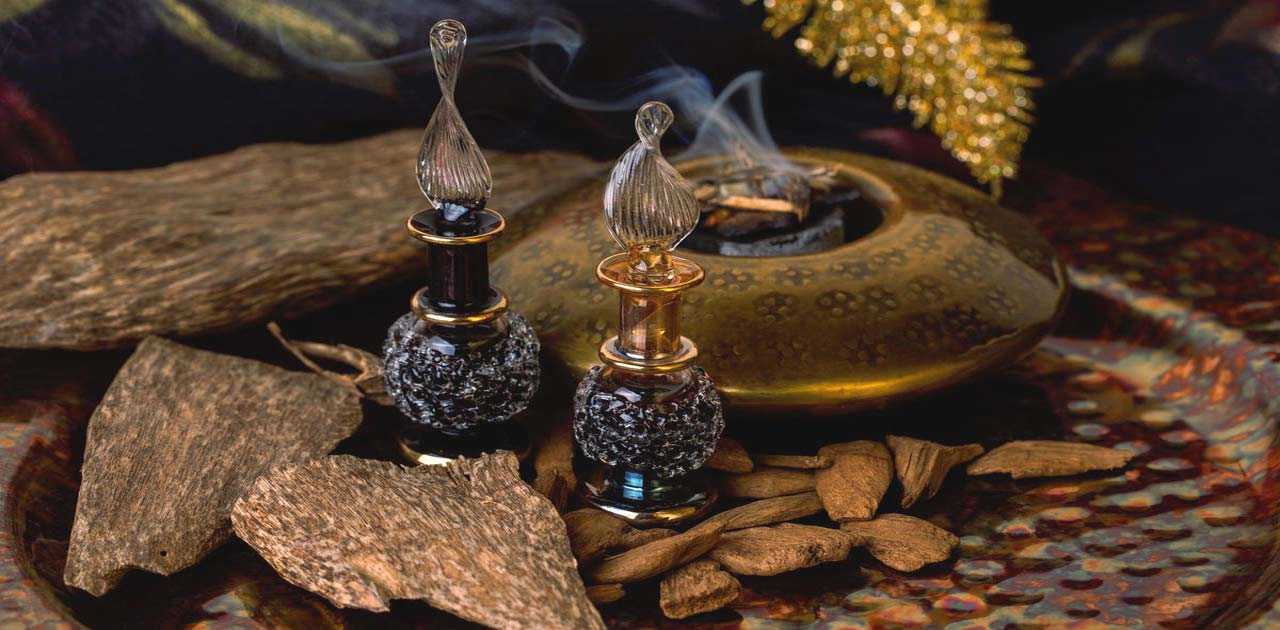
Agarwood
is a highly prized incense that is extremely rare. It has at
least a 3000-year history in the Middle East, China and Japan.
There are also references to agarwood in the literature of India
and France, and even in the Old Testament of the Bible. Agarwood
remains today the world's most expensive incense. The value
of agarwood shipped out of Singapore alone each year has been
estimated to exceed $1.2 billion. E. Hansen, Saudi Aramco World
51:2-13 (December 2000). This aromatic resinous wood has many
common names including agarwood, gaharu, eaglewood, aloeswood,
agila wood, aguru, agar, oud, ude, ud, ood, oode, jinkoh, jinko,
Ch'Ing Kuei Hsiang, Ch'En Hsiang, Chan Hsiang, Chi Ku Hsiang,
Huang Shu Hsiang, kalambak, and grindsanah.
The
resin is used by Traditional Chinese, Unanai, Ayuravedic, and
Tibetan physicians. Used medicinally, agarwood is a remedy for
nervous disorders such as neurosis, obsessive behavior, and
exhaustion. Agarwood is highly psychoactive and is used in spiritual
rituals. Many religious groups prize it as a meditation incense,
to calm the mind and spirit. In Ayuravedic medicine it is used
to treat a wide range of mental illness and to drive evil spirits
away. In Japan, it is considered by many to be sacred, and is
used to anoint the dead. In Buddhism, it serves as a major ingredient
in many incense mixtures, and it is considered to be one of
the three integral incenses, together with sandalwood and cloves.
The
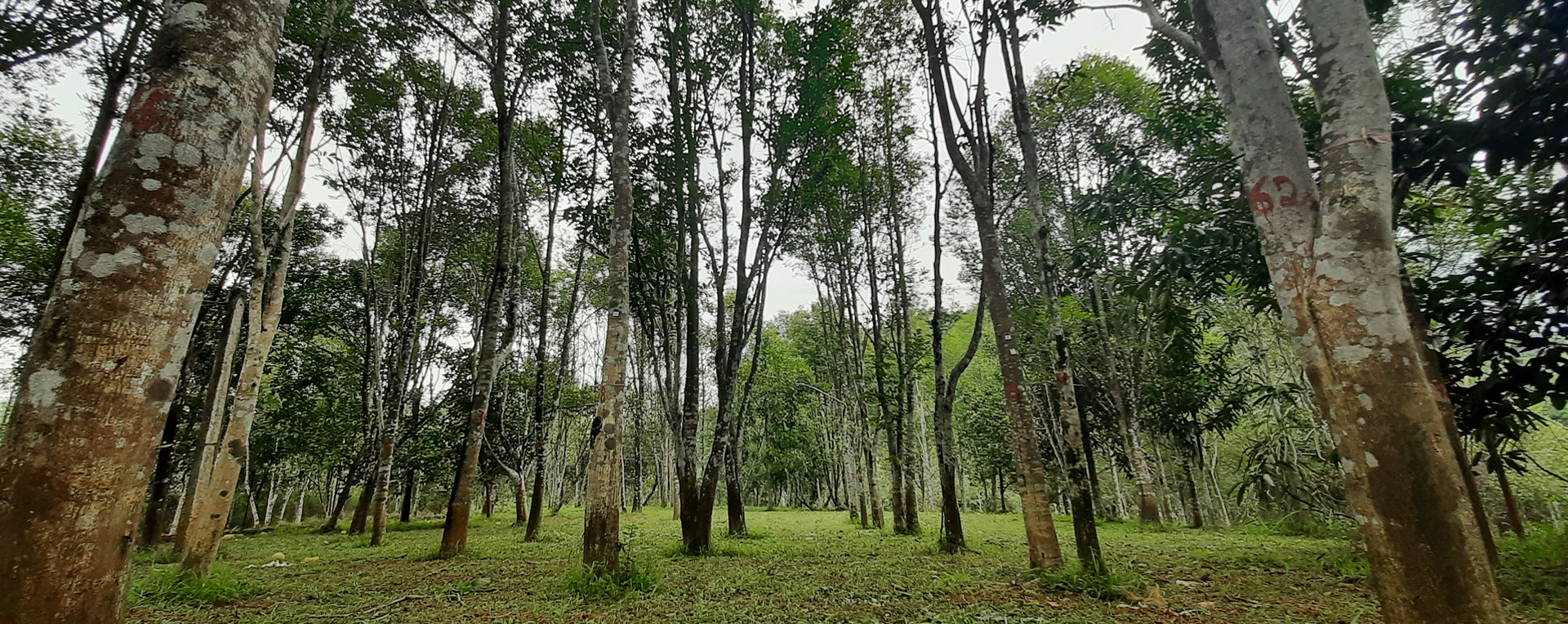
source of agarwood is the Aquilaria tree. The Aquilaria tree
is an evergreen that grows up to 40 meters high and 60 centimeters
in diameter. It bears white flowers that are sweetly scented.
The genus Aquilaria is an angiosperm taxonomically placed in
the Thymelaceaceae family. Fifteen species of Aquilaria have
been reported and all produce agarwood. The taxonomy of these
species is not completely clear and not all species are recognized
by taxonomists. Species include Aquilaria malaccensis, A. agallocha,
A. baillonii, A. crassna, A. hirta, A. rostrata, A. beccariana,
A. cummingiana, A. filaria, A. khasiana, A. microcarpa, A. grandiflora,
A. chinesis or A. sinensis, A. borneensis, and A. bancana. Aquilaria
bancana has been questioned as a true species of Aquilaria and
has been placed in the Gonystylaceae family of the Gonystylus
genus, as Gonystylus bancanus. Gonystylus has also been found
to produce an aromatic resin that is considered the same as
or very similar to agarwood.
Aquilaria
trees are native to Asia from Northern India to Vietnam and
Indonesia. The healthy wood of the Aquilaria tree is white,
soft, even-grained, and not scented when freshly cut. Under
certain pathological conditions, the heartwood becomes saturated
with resin, and eventually becomes hard to very hard. The best
grade of agarwood is hard, nearly black and sinks when placed
in water. In general, agarwood is considered inferior as it
appears lighter in tone, with diminishing amounts of resin.
The
process of agar deposits is not fully understood. A Dutch paper
from 1933 (J. P. Schuitemaker, "Het garoehout van West
Boreno" Boschbouwkundig Tijdschrift Tectona Uitgave der
Vereeniging van Hoogere Ambtenaren bij het Boschwezen in Nederlands
Oost-Indi 26:851-892) reported the occurrence of agarwood in
Borneo and discussed many different types of resin produced
in trees. Most of the local people at the time believed that
agarwood formed from mysterious ways and was associated with
the spirit world. The author stated that "the mysterious
occurrence of the `holy` wood is connected to supernatural powers"
and that agarwood was referred to as "wood of the gods."
The author also noted that "we cannot exclude the possibility
of a pathological occurrence of which the cause was unknown,"
that "perfect trees never have agarwood," and that
agarwood "is formed around wounded or rotting parts of
the trunk." The author also suggested that salt put into
holes in trees might promote resin. The paper also stated that
if the agarwood was infectious, maybe it would be possible to
induce agarwood formation by infecting the trunk artificially
by putting fresh cut agarwood into the stem.
Later
authors also reported the longstanding belief was that agar
deposits were created as an immune response by the tree, the
result of attack by a fungus. I. H. Burkill, A dictionary of
the economic products of the Malay Peninsula. Vol. I Crown Agents
for the Colonies, London p. 197-205. In the 1940's and 1950's,
several researchers investigated the origins of agar deposits
with varying and sometimes conflicting results. Rahman and Basak,
Bano Biggyan Patrika 9:87-93 (1980). Others concluded that it
was unlikely that there was a specific fungal cause for the
production of agarwood. Gibson, Bano Biggyan Patrika 6:16-26
(1977). It was suggested that the resin deposits might arise
as a direct response of the stem tissues of the tree to wounds
with subsequent invasion by weak pathogens. Id.
Rahman
and Basak suggested that wounding produced color changes in
the wood with some "oleoresin" deposits. Rahman and
Basak, Bano Biggyan Patrika 9:87-93 (1980). They postulated
that the presence of an exposed, open wound seemed to be of
more importance than the presence of certain species of fungi
within a wound. They, however, concluded their paper by stating
that further investigation was needed in order to determine
what factors were responsible in wounding, which are important
in agar deposition.
The
identification of the small proportion of the trees having agar
is difficult and destructive, which added greatly to the near-extinction
of natural stands of tress. Also, large-scale logging operations
have destroyed many forested areas where the Aquilaria trees
are found. Thus, the current source of agarwood, the naturally-growing
old-growth Aquilaria trees, is becoming extinct. To date no
one has successfully cultivated agarwood. E. Hansen, Saudi Aramco
World 51:2-13 (December, 2000). Therefore, there is a growing
need for a means to cultivate Aquilaria trees that produce agarwood
as a renewable source for agarwood.
SUMMARY
OF THE INVENTION
The
present invention provides a method of producing agarwood by
forming an artificial wound into the xylem in an Aquilaria or
Gonystylus tree, and providing a means for aerating the wound.
Additional wounds may be formed either at the same time or after
a discolored area has begun forming in the tree. The wound may
be formed by cutting, drilling, or chopping or by inserting
a nail. The wound is formed to reach the xylem. The wound may
be formed to a depth of at least about 1 to 10 cm into the xylem.
In one embodiment the wound is formed to a depth of about 4-6
cm. The wounds may be made as a series of closely spaced wounds
in the tree. For example, the series of wounds, such as about
30-100 wounds, may be positioned in a spiral up the tree. The
wounds may be positioned at an interval of about 5 cm apart.
In
the present method, the aeration means may be an aeration device
inserted into the wound, such as a nail, tube or pipe inserted
into the wound. The aeration device may contain aeration holes
in it and/or it may contain grooves on its exterior surface.
The aeration device may be made of plastic, bamboo, wood or
other organic material, or metal, such as iron. It may be about
2 cm in diameter. When inserted, the aeration device may extend
out from the exterior of the tree, such as about 2 to 15 cm
from the exterior of the tree.
Alternatively,
the aeration means of the present invention may be a periodic
(e.g., monthly) re-wounding of the wound. This may be by scribing
a patch of cambium around the wound one or more times over the
life span of the tree. It may also be by removing a region of
cambium adjoining the wound.
The
present method may also involve applying a resin-inducing agent
to cells surrounding the wound. This resin-inducing agent stimulates
resin production in the tree. It may kill live parenchyma cells
around the wounded region of the xylem. The resin-inducing agent
may be a chemical agent. If a chemical agent is used, it may
kill cells locally. It can be, for example, sodium bisulfite,
NaCl, ferric chloride, ferrous chloride, chitin, formic acid,
cellobiose, salicyclic acid, iron powder, or yeast extract.
In particular, it may be 1:1:3 sodium bisulfite, Difco yeast
extract and iron powder. Alternatively, or additionally, the
resin-inducing agent may be an organism, such as an insect or
microbe, such as a fungus (e.g., Deuteromyota sp., Ascomycota
sp., Basidiomycota sp.)
The
tree that is used in the present invention is less than 100
years old, preferably is about 2-80 years old, more preferably
3-20 years old, or even only about 3-12 years old. The tree
used in the present invention is not growing naturally in an
old growth forest. An "old growth forest" is defined
herein as a forest that is ecologically mature and has been
subjected to negligible unnatural disturbance such as logging,
roading and clearing. Also included in this definition are ecologically
mature forests where the effects of disturbance are now negligible.
In such old growth forests, the upper stratum or overstory is
in the late mature to over-mature growth phases. Species of
trees that can be used in the present invention include, for
example, Aquilaria malaccensis, A. agallocha, A. baillonii,
A. crassna, A. hirta, A. rostrata, A. beccariana, A. cummingiana,
A. filaria, A. khasiana, A. microcarpa, A. grandiflora, A. chinesis
or A. sinensis, A. borneensis, and A. bancana, or Gonystylus
bancanus.
The
present invention also provides agarwood produced by the methods
described above. The present invention further provides agarwood
from a tree grown in a home garden, in a plantation, in a greenhouse,
or in agricultural lands.
It
should be noted that the indefinite articles "a" and
"an" and the definite article "the" are
used in the present application, as is common in patent applications,
to mean one or more unless the context clearly dictates otherwise.
BRIEF
DESCRIPTION OF THE FIGURES
FIG.
1. Schematic drawing of wounded Aquilaria tree at time of harvest
with nothing done to promote agarwood showing internal callus
formation produced by bundles of included phloem cells, and
wound closure from inside the drill wound. Surface cells also
produce callus tissue and wound closure occurs from the outer
edge of the drill wound. Little discoloration forms and insignificant
amounts (if any) of agarwood may form in a very thin band between
the discolored wood and the sound, unaltered xylem.
FIG.
2A. Schematic drawing of Aquilaria tree that was wounded and
tube with aeration holes inserted. FIG. 2B. Drawing of trees
that were wounded and had multiple aeration tubes inserted into
the trees.
FIG.
3. Schematic drawing showing wounded Aquilaria tree at time
of harvest with plastic tube inserted into the drill hole. Tree
was treated with sodium bisulfite. A discolored region around
the wounded area extends above, below and around the wound.
An area of agarwood resin forms in a thick band between the
discolored wood and the sound, unaltered xylem. This area of
agarwood production gets larger and more dense over time.
FIG.
4. Schematic drawing showing the effects of new wounds made
about 1 year after original wound. These new wounds allow the
agarwood to be formed in the new xylem produced after the original
wounds are made.
DETAILED
DESCRIPTION OF THE INVENTION
Aquilaria
has a unique anatomy, and one who wishes to induce agarwood
in young trees must understand its anatomy. Unlike most trees
in the Angiospemae that produce phloem cells external to the
xylem (growing out from the circumference of the cambium), Aquilaria
produces bundles of phloem cells throughout the xylem as well
as in a layer external to the xylem. This means that the xylem
(consisting of vessels, fibers and parenchyma cells) also contains
groups of phloem cells called included phloem or interxlyary
phloem of the diffuse (foraminate) type. When trees are wounded
they respond by forming new wood cells by the cambium. These
cells differentiate and close the wound with newly produced
cells (Blanchette R. A. 1992. Anatomical responses of xylem
to injury and invasion by fungi. In: Defense Mechanisms of Woody
Plants Against Fungi. Edited by R. A. Blanchette and A. R. Biggs.
Springer-Verlag Berlin. Pp. 76-95). Once the wound is closed,
aeration to the affected wood stops and internal processes needing
air cease. Most trees close wounds by producing new cells at
the edge of the wounded cambium. Aquilaria trees close wound
from inside the xylem as well as externally.
The
present experiments have shown that the cambium of Aquilaria
trees reacts to wounding by producing new cells all around the
wound and even on the surface of the wound. See FIG. 1. Phloem
cells apparently produce new cambial cells that produce new
differentiated wood cells. Wound closure occurs rapidly. Phloem
bundles on the surface of the exposed xylem produce secondary
cambial cells that produce new cells to seal and close the wound.
Large surface wounds do not close by only producing callus at
the edge of the wounds (like most trees) instead the entire
surface of the exposed xylem produces new cambial cells which
in turn differentiate producing new wood cells that close the
wound.
Although
wounding has been suggested to cause agarwood, the typical types
of wounds that are produced in trees produce no agarwood. If
artificial wounds are made into the xylem by boring into the
tree, the included phloem present throughout the wounded site
reacts and may produce new cambial cells. New wood formed from
this new cambium will grow within the wounded xylem. This seals
and closes the internal wound. Aquilaria trees with internal
wounds can seal and close wounds from the inside of the trees
as well as along the wounded surface of the exterior surfaces
of the tree. The present experiments show that wound closure
stops agarwood formation.
The
literature has suggested that fungi growing in the wounded Aquilaria
tree may cause agarwood formation. Different types of fungi
have been suggested including Phialophora parasitica, Torula
sp., Aspergillus sp., Penicillium sp., Fusarium sp., Cladosporium
sp., Epicoccum granulatum, Cylimndrocladium, Sphaeropsis sp.,
Botryodiplodia theobromae, Trichoderma sp., Phomopsis sp., and
Cunninghamella echinulata. With all of these fungi suggested
as a possible cause and no clear definitive research to show
that a fungus is responsible for agarwood to form, researchers
have indicated "that agaru arises from a much more generalized
cause than previously invisaged" (Gibson, Bano Biggyan
Patrika 6:16-26 (1977)). Punithalingam and Gibson, Nova Hedwigia
29:251-255 (1978) report a new species of Phomopsis from Aquilaria
but indicate "no evidence was obtained to show that this
fungus was the cause of the formation of agaru." In a paper
by Rahman and Basak (Bano Biggyan Patrika 9:87-93 (1980)) on
"Agarwood production in agar tree by artificial inoculation
and wounding" after experiments to produce agarwood they
concluded, "More experimental work needs to be done before
the generation of agar deposit is fully understood. There is
no doubt that we are still far from the development of techniques
which would provide an assured supply of agar products."
The paper by Rao and Dayal (International Association of Wood
Anatomist Bulletin N.S., 13:163-172 (1992)) discusses the formation
of agarwood and provides microscopic views of affected wood
from naturally growing trees with agarwood. They conclude by
suggesting that "it is important to study factors such
as tree age, within-tree seasonal variation in responsiveness,
and environmental variation" to determine how agarwood
is formed. Research by the present inventors has shown that
tree age is not important (planted young trees not growing naturally
in a forest can produce agarwood) and agarwood has been produced
in trees at three different geographical locations in Vietnam
showing variation in the environment is not a critical factor.