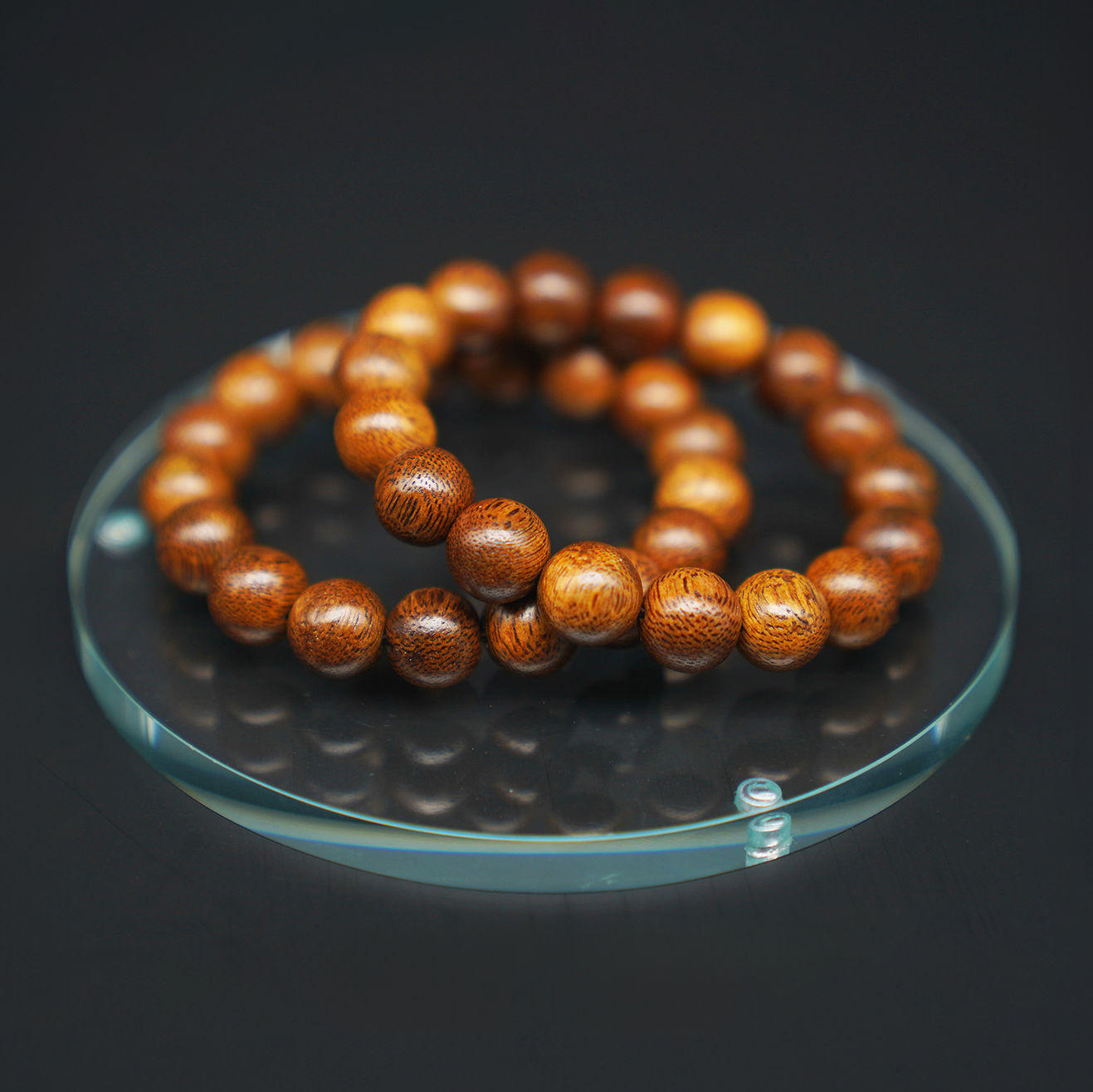
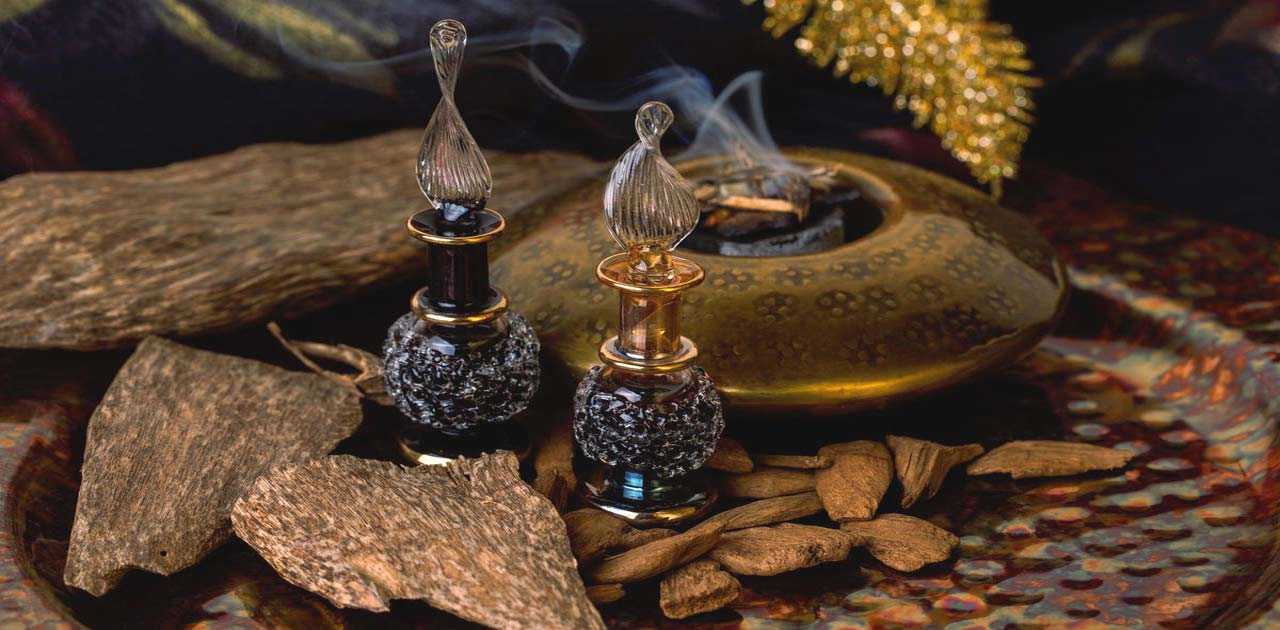
Agarwood
is a resinous wood substance that is produced by the tree as
a nonspecific host response to wounding, insects and/or microbial
invasion. The resin contains tree extractives that have aromatic
terpenes present. As discussed above, Aquilaria is unique in
that it produces phloem bundles within the xylem. This network
of phloem and parenchyma cells produce and distribute the resin
around affected areas as a tree defense reaction. It was previously
thought that only old trees could produce resin.
The
present inventors have determined how agarwood forms in nature
and have used this information to produce agarwood in young
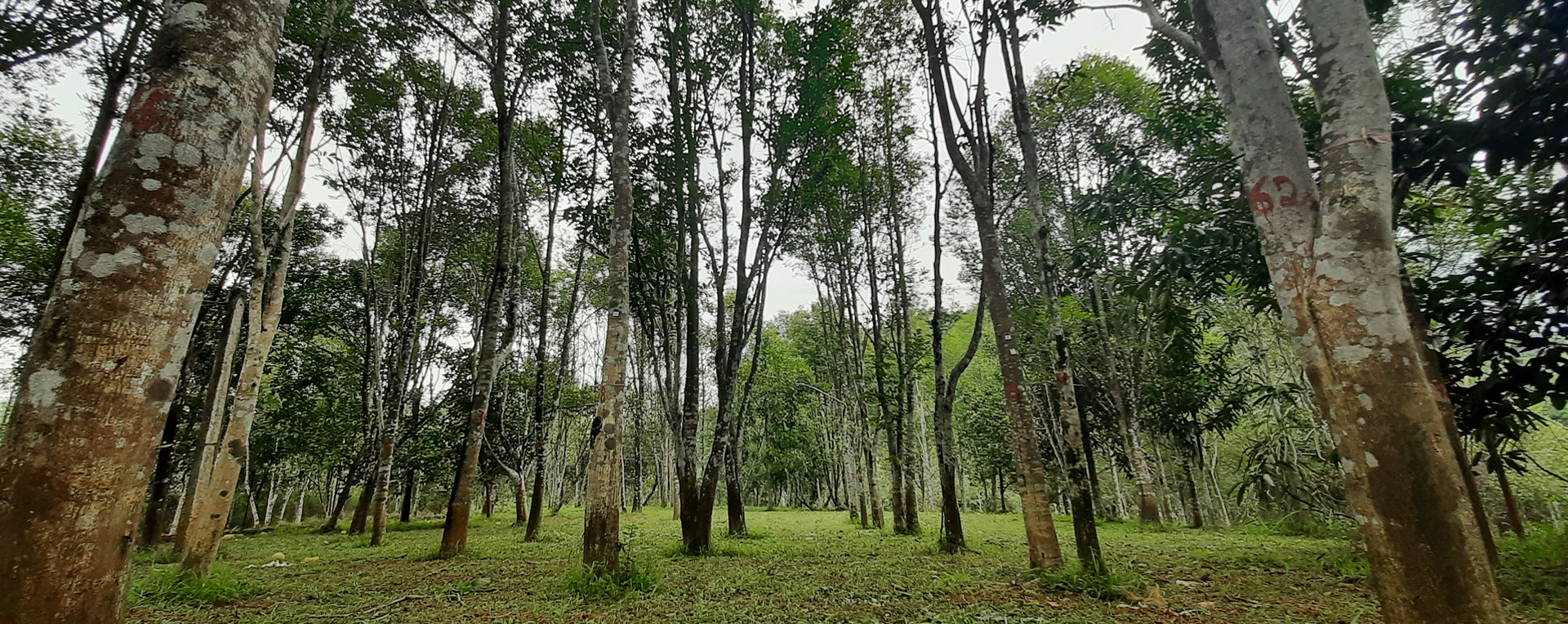
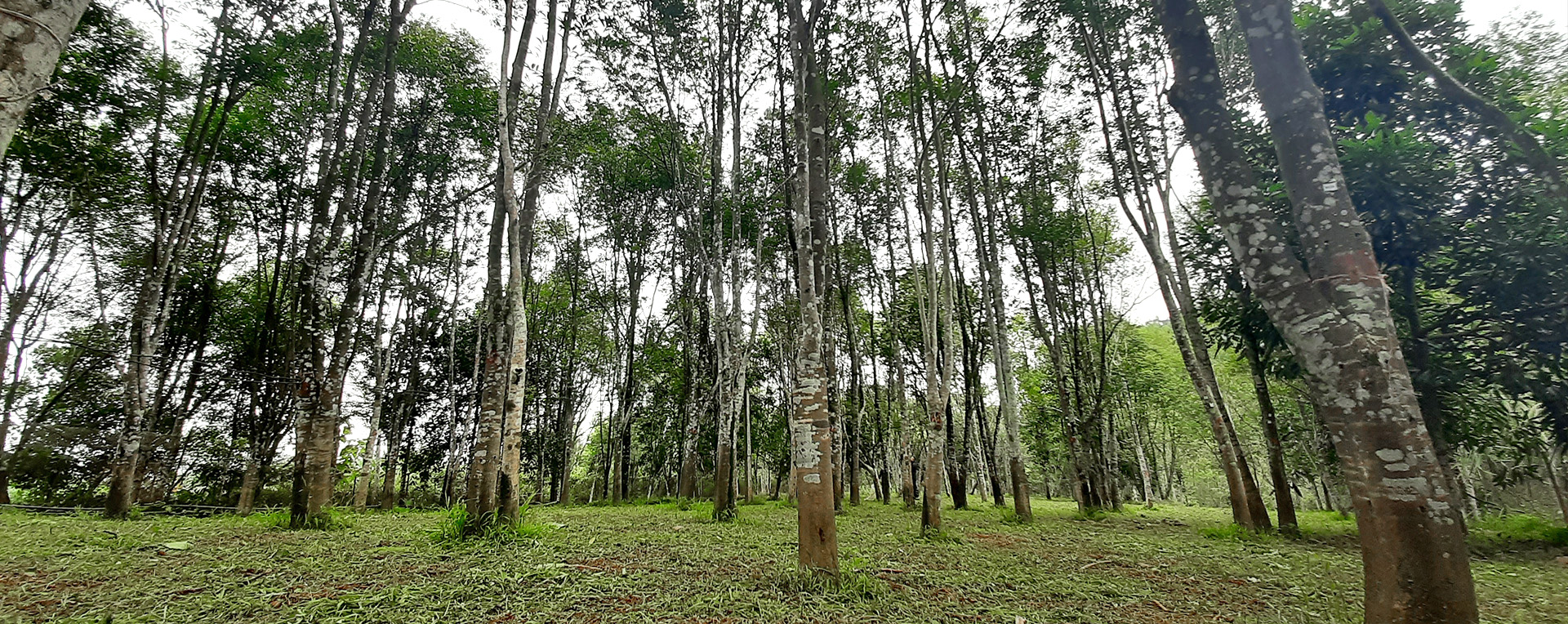
cultivated Aquilaria trees. The trees may be grown, for example,
in a home or cooperative garden, on a plantation, or in a greenhouse.
The present technique for producing agarwood has been used on
young plantation-grown trees, about 3 to 8 years old. The technique
can be performed on trees that are older than this, although
for economic reasons, it is beneficial to use younger trees.
The inventors have found that two factors are needed in order
to induce the production of agarwood in Aquilaria trees: (1)
an open wound in the tree, and (2) this open wound must be aerated.
Trees
are wounded with a drill to make a hole into the xylem. Many
types of wounds were tried and a hole that cuts across the xylem
is needed. The size of the hole is not important. Of prime importance
is that the hole must not be closed by callus tissue. Small
drill wounds may close by new wood growth within one year in
fast-growing tropical trees. To insure that the wound does not
close, a region of cambium can be cut around the drill wound.
This removes the cambium and delays callus formation and wound
closure. This process needs to be done repeatedly if the wound
appears to be closing. Another method is to insert a sturdy
plastic, bamboo, wood or other organic material, or metal tube
or pipe (with holes made all along the sides of the tube) into
the drill wound leaving it protruding out of the tree. See FIGS.
2A and 2B. As the tree grows, the tube prevents the tree from
closing the wound. These and any other methods to prevent wound
closure can be used.
In
order to maximize agarwood production, one can disturb the tree
cells that line the hole after the hole is made. It was seen
that the more disruption of live cells, the greater the internal
area where agarwood formed. If a hole is drilled, agarwood forms
only around the edge of the wound (and only while aeration occurs).
If a drill wound is made and substances that kill some of the
tree cells (resin-inducing agents) are introduced, the resin
forms over a much larger area. See FIG. 3. Many different resin-inducing
substances can be used, such as NaCl, ferric chloride, ferrous
chloride, chitin, formic acid, etc. Also microbes can be inoculated
into the tree to induce a more intense host response. Species
of fungi, taxonomically from the Deuteromycota, Ascomycota and
Basidiomycota groups that were isolated from agarwood columns
in old growth trees growing in Viet Nam were inoculated into
the test trees. The presence of some fungi may help keep the
wound open and disrupt live cells of the tree, therefore acting
as an inducing agent. The sesquiterpenes produced in agarwood
from naturally occurring resin in old growth trees and in young
plantation-grown trees were chemically analyzed, and the resin
was the same.
In
one embodiment of the invention, the method would include a
series of drill wounds made in a spiral up the tree (30 to 100+
per tree). Each wound is separated by a short interval. Each
wound receives a tube, such as a plastic tube, with many holes
in its walls. The tube is inserted into the drill wound and
left to extend out from the tree 2 to 15 cm. The tube would
also contain an inducing agent.
Another
method would be to drill holes that are spiraled up the tree
and the inducing agent is added directly into the wounds. Each
wound would be scribed to cut away a patch of cambium around
the hole. The wounds would be inspected over time and new scribing
and/or drilling used to keep the hole open. Trees may be grown
in nature or in greenhouses for agarwood production.
The
following examples are intended to illustrate but not limit
the invention.
EXAMPLES
Trees,
approximately 4-5 years old, growing in plantations in An Giang
Province or Phu Quoc Island, Vietnam were used for experiments
1 to 8.
Example
1
Trees
were wounded by making six ax wounds into the main trunk on
each tree. Trees harvested after six months were cut and split
through the wounded area. The area of discoloration was measured
on the exposed longitudinal plane. Resin formation (agarwood)
occurred (if it occurred) in a small zone between the wounded,
discolored wood and the live unaltered wood. After 6 months,
the mean area of discoloration of six ax wounds was 6.1 cm.sup.2
ranging from 1.6 to 9.1 cm.sup.2 and no distinct area of resin
formation was seen. After 21 months, the mean area of six ax
wounds was 0.3 cm.sup.2 ranging from 0.0 to 1.5 cm.sup.2 and
no resin was apparent. The results from this study show that
wounding trees with an ax and making shallow surface wounds
does not produce agarwood.
Example
2
Trees
were wounded with a 5/8 inch drill to a depth of approximated
5 cm. Six wounds were made in a spiral fashion on the trunk
of the tree approximately 20 cm apart. One of the six wounds
served as a control and the other 5 wounds were filled with
agarwood (approximately 0.5 g per wound) from a tree in the
forest with naturally produced agarwood. This tree had been
cut by poachers but some parts of the tree remained and some
fresh agarwood was obtained from it. Small sections of the agarwood
were cut and put into the drill wounds. After 6 and 18 months
trees were harvested and evaluated with the following results.
Wound Treatment Area of discoloration
After 6 months
1 Control 11.7
2 agarwood 27.6
3 agarwood 22.1
4 agarwood 15.6
5 agarwood 12.6
6 agarwood 16.0
After 18 months
1 Control 18.4
2 agarwood 16.9
3 agarwood 18.8
4 agarwood 19.1
5 agarwood 15.1
6 agarwood 17.6
The amount of discoloration was somewhat greater than when ax
wounds were used and a very small region of what appeared to
be resin was found at the interface between discolored wood
and sound wood. However, trees rapidly closed and the agarwood
formation process did not progress as seen in the relatively
small areas of discoloration present after 18 months.
Example
3
Trees
were wounded with a 5/8 inch drill to a depth of approximated
5 cm. Six wounds were made in a spiral fashion on the trunk
of the tree approximately 20 cm apart. One of the six wounds
served as a control and the other 5 wounds were inoculated with
pure cultures of fungi isolated from fresh agarwood obtained
from natural forests in Vietnam. Five different fungi, representing
different species of Ascomyota and Deuteromycota, were used.
The genus and species was not determined but culture morphology
indicated each fungus represented different genera. Only cultures
proving to be successful for stimulating agarwood were to be
identified to species after field data was obtained. Fungi were
grown on sterile oats supplemented with malt extract broth for
added nutrients. Cultures were grown for 3 weeks on the oat/malt
extract substrate. Drill wounds inoculated with the fungi were
filled with the fungus/oat inoculum. After 6, 18 and 21 months
the trees were harvested and the following results were obtained.
Wound Treatment Area of discoloration
After 6 months
1 Control untreated 24.8
2 Isolate F-4 20.2
3 Isolate F-5 17.7
4 Isolate F-9 14.6
5 Isolate F-24 15.6
6 Isolate F-32 11.7
After 18 months
1 Control untreated 8.8
2 Isolate F-4 7.7
3 Isolate F-5 12.5
4 Isolate F-9 8.6
5 Isolate F-24 1.6
6 Isolate F-32 13.3
After 21 months
1 Control untreated 10.2
2 Isolate F-4 8.6
3 Isolate F-5 11.4
4 Isolate F-9 10.8
5 Isolate F-24 9.9
6 Isolate F-32 11.7
The results indicate that the common fungi associated with fresh
agarwood in Vietnam did not significantly stimulate agarwood
to form. The area of discoloration and intermediate area of
very slight amounts of resin production was similar between
the non-inoculated drill wounds and wounds receiving pure cultures
of fungi. No significant increases in agarwood production occurred
over the three harvest dates.
Example
4
Trees
were wounded with a 5/8 inch drill to a depth of approximated
5 cm. Six wounds were made in a spiral fashion on the trunk
of each tree approximately 20 cm apart. Two of the six wounds
served as controls and the other 4 wounds were inoculated with
different types of nutrient growth media (used to culture microorganisms
in the laboratory) or soil.
Treatments
included:
Control
no treatment
Difco
Malt Extract (ME) approximately 0.1 g added per wound
Difco
mycological agar (MYCO) approximately 0.1 g added per wound
Difco
yeast extract (YE) approximately 0.1 g added per wound
Soil
approximately 0.25 grams of soil from the plantation where the
tree was growing was added per wound
Wound Treatment Area of discoloration
After 12 months
1 Control no treatment 16.7
2 ME 11.2
3 MYCO 12.3
4 YE 8.1
5 Soil 7.3
6 Control no treatment 6.4
After 21 months
1 Control no treatment 6.0
2 ME 7.2
3 MYCO 16.8
4 YE 10.8
5 Soil 10.5
6 Control no treatment 12.6
These results indicate that no inducement of agarwood was found
when just nutrients used to grow fungi in culture were used.
Soil placed into the drill wound also did not stimulate agarwood
formation. All wounds had evidence of wound closure from surface
cambium cells and the included phloem cells of the xylem produced
new cells to close the wounds from within the drill hole.
Example
5
To
test if different types of compounds could stimulate agarwood
production, 5/8 inch drill wounds were made approximately 5
cm into the main trunk of young plantation trees and different
materials used to treat the drill wounds. Chemicals used were
from Sigma Chemicals Inc. St. Louis, Mo. or Mallinckrodt Inc.
Paris, Ky. One drill wound per tree received no treatment and
others received one of the following treatments:
Chitosan--purified
chitin approximately 0.2 g of chitin was added per wound
Formic
acid--approximately 0.1 g of formic acid was added per wound
Sodium
chloride--approximately 0.2 g added per wound
Cellobiose--approximately
0.2 grams added per wound
Lime--approximately
0.1 g calcium carbonate added per wound
Trees
were harvested after 12, 18 and 21 months.
Wound Treatment Area of discoloration
After 12 months
1 Control no treatment 11.2
2 Chitosan 9.0
3 Formic acid 28.5
4 NaCl 49.3
5 Lime 10.0
6 Cellobiose 9.9
After 18 months
1 Control no treatment 25.4
2 Chitosan 22.1
3 Formic acid 18.6
4 NaCl 44.7
5 Lime 18.7
6 Cellobiose 20.3
After 21 months
1 Control no treatment 11.1
2 Chitosan 3.8
3 Formic acid 31.8
4 NaCl 36.4
5 Lime 9.7
6 Cellobiose 7.4
These results indicate that the reaction area within a tree
and area of discoloration can be increased with compounds that
kill live parenchyma cells around the wounded region of the
xylem. Deposits of agarwood resin were formed at the edges of
the discolored regions. Substances like formic acid that have
a low pH and NaCl that has a high pH both can disrupt live cells
and induce greater amounts of agarwood than the control wounds.
As the tree grows and wounds are closed the affected area decreases.
Other substances like chitosan, cellobiose and lime do not increase
the area of discoloration within the tree at the concentrations
tested. However, if added at amounts that are detrimental to
live cells adjacent to the wounded area it did have an effect.
Microscopic observations indicate that the cells around wounds
treated with NaCl or formic acid react extensively and phloem
cells are filled with resin. These cells do not have the ability
to produce cambial initial cells and wound closure is delayed.
Substances that affect the live parenchyma cells and phloem
cells in the xylem stimulate resin production and induce agarwood
production. They also inhibit wound closure from the outer cambium
as well as new cells formed by the included phloem.
Example
6
Analysis
of the chemical composition of natural agarwood and experimentally
produced agarwood was done by identification of the sesquiterpenes
present. Samples were extracted in methylene dichloride at 37.5.degree.
C. and nitrogen used to reduce the volume to no less than 0.1
ml. A methylating agent was added before injecting into a Hewlett-Packard
5890 gas chromatograph with a 15 m.times.0.25 mm DB-1 column.
The injector temperature was 280.degree. C. After four minutes
the initial column temperature of 50.degree. C. was raised at
10C/min to 340.degree. C. The eluent was detected with a Hewlett-Packard
5972 mass selective detector with the interface at 280.degree.
C.
Samples
of low, medium and high quality agarwood obtained commercially
from Singapore merchants had levels of sesquiterpenes that ranged
from 0.3 to 10% of the sample. Sesquiterpenes included, aromadendrene,
.beta.-selinene, .gamma.-cadinene, .alpha.- and .beta.-guaiene.
The levels of sesquiterpenes from samples of agarwood from the
experimental trees were at 0% (control wounds) to 1.5% (NaCl
treated drill wound treatment after 12 months). Sesquiterpenes
included aromadendrene, .alpha.-selinene, .gamma.-cadinene,
.alpha.- and .beta.-guaiene and .alpha.-humulene.
Example
7
Multiple,
small drill wounds were made at three locations on each tree
to observe the effect of wound size and multiple wounds on agarwood
formation. Twenty holes approximately 5mm in diameter were drilled
approximately 5 cm into the xylem of the tree. Four rows of
five wounds were made approximately 2 cm apart. Groups of wounds
were made at 30 cm intervals on different sides of the tree.
A 10.times.10 cm area of the bark was cut out around each group
of 20 wounds. Trees were harvested after 18 months. The area
of discoloration caused by the small drill wounds coalesced
together resulting in a large area of discoloration with some
agarwood resin formed along the edges. The multiple wounds served
to disrupt normal functioning of cells around the wounds and
wound closure was delayed. Single small drill wounds made in
a tree would not produce significant amounts of agarwood resin
since they would close rapidly, but groups of multiple wounds
made closely together on the tree disrupted the normal functioning
of the xylem and stimulated agarwood production.
Example
8
Fourteen
plantation grown trees on Phu Quoc Island were used to test
different treatments. Each tree received 8 wounds that were
spiraled up the main trunk of the tree separated by approximately
20 cm. A range of different types of wounds and treatments as
well as controls were made on each tree. Each treatment was
made at a different location on each tree to insure that location
of wound did not have an effect. Trees were harvested after
15 months and taken to the laboratory for analyses.
Treatments
included:
1.
A surface wound approximately 5.times.5 cm was made by cutting
the bark and removing the bark tissue to expose the xylem. No
drill hole was made.
3.
A 5/8 inch drill wound was made approximately 5 cm into the
xylem and a 5.times.5 cm section of the bark removed around
the drill hole and approximately 0.3 g sterile Aquilaria sawdust
added to the drill wound.
4.
Same as #3 but with approximately 0.3 g of a 1:1 ratio of ferrous
chloride and sterile Aquilaria sawdust added to the drill wound.
5.
Same as #3 with approximately 0.3 g of a 1:2 ratio of NaCl and
sterile Aquilaria sawdust added to the drill wound.
6.
Same as #3 but with approximately 0.3 g of a 1:4 ratio of Difco
yeast extract and sterile Aquilaria sawdust.
7.
Same as #3 but with approximately 0.3 g of a 1:1 ratio of sodium
bisulfite and sterile Aquilaria sawdust.
8.
Same as #3 but with approximately 0.3 g of a 1:2:4 ratio of
Difco nutrient broth: Difco malt extract: sterile Aquilaria
sawdust.
After
15 months, 8 trees were harvested and brought to the laboratory
for analyses. The area of discoloration and resin formation
was determined by splitting the tree through the wounded region
and area affected measured using an image analyzer. Area (cm.sup.2)
was determined for all wounds in the longitudinal plane. Each
value is a mean of 8 wounds.
Wound Treatment Area of discoloration/resin
1 Surface wound 1.4
2 Drill wound 46.3
3 Surface wound and drill wound 27.3
4 wounds/ferrous chloride 112.5
5 wounds/NaCl 48.1
6 wounds/yeast extract 28.6
7 wounds/sodium bisulfite 182.0
8 wounds/nutrient media 34.3
This study showed the effectiveness of several treatments for
the production of appreciable amounts of agarwood in young Aquilaria
trees. Surface wounds do not produce agarwood. Deep penetrating
wounds may produce some agarwood as long as the wound site remains
open. Compounds that challenge the living cells around the drill
wounds in the xylem (e.g. NaCl, sodium bisulfite, ferrous chloride,
and any other chemicals that disrupt the normal functioning
of living tree cells) increase the area of discoloration within
the tree and the amount of agarwood resin formed.
Example
9
Young
trees growing at two sites, in home gardens and on agricultural
land (Kon Tum, Vietnam and Nui Cam, Vietnam), received 8 wounds
per tree. Drill wounds 5/8 inch diameter were drilled approximately
5 cm into the main trunk of each tree in a spiral fashion separated
by approximately 20 cm. All drill wounds were scribed to remove
a 5.times.5 cm area of bark around the wound. Fungal treatments
consisted of three different types of Basidiomycota obtained
from Aquilaria trees in Vietnam. These isolates were not identified
to genus but culture morphology indicated they were different
genera. Cultures were grown on sterile rice supplemented with
malt extract. Cultures were grown for three weeks before inoculation.
Treatments
included:
1.
Control wound receiving sterile rice
2.
Fungal culture 97-14-5
3.
Fungal culture 97-13-7
4.
Fungal culture 97-11-25
5.
Control wound receiving 5 g sterile Aquilaria sawdust
6.
Approximately 0.5 g of a 1:4 ratio of sodium bisulfite and sterile
Aquilaria sawdust
7.
Approximately 0.5 g of a 1:2 ratio of salicylic acid in sterile
Aquilaria sawdust
8.
Approximately 0.5 g of a 1:4 ratio of ferrous chloride in sterile
Aquilaria sawdust
After
15 months two trees were harvested from each location and brought
to the laboratory for analyses. The mean area for each type
of wound was calculated.
Wound Treatment Area of Discoloration cm.sup.2
Location Kon Tum
1 Control 22.7
2 97-14-5 14.5
3 97-13-7 18.0
4 97-11-25 17.5
5 Control 11.1
6 Sodium bisulfite 52.3
7 Salicylic acid 16.9
8 Ferrous chloride 18.4
Location Nui Cam
1 Control 15.5
2 97-14-5 18.2
3 97-13-7 31.2
4 97-11-25 20.9
5 Control 20.6
6 Sodium bisulfite 56.9
7 Salicylic acid 25.5
8 Ferrous chloride 23.3
This study indicated that the three different basidiomycetous
fungi used did not result in extremely large areas of discoloration
and the area was not very different from control wounds. It
also indicated that the reduced concentration of sodium bisulfite
used in comparison to example 8 caused a reduced amount of discoloration
and agarwood resin. Although less area of discoloration was
found, agarwood resin did form at the discolored/sound wound
interface. When this wood was removed from around the wound
and burned it produced a distinctive agarwood aroma. Some compounds
such as salicylic acid and ferrous chloride did not produce
large areas of discoloration and apparently must be applied
in sufficient concentration to affect the living cells in the
xylem adjacent to the drill wound. For example, in this experiment
ferrous chloride was used in a 1:4 ration with sawdust and moderate
amounts of discoloration were observed. In previous experiments
it was used in a 1:1 ratio with greater amounts of reaction
and agarwood production in the wounded xylem.
Example
10
Iron
nails placed into the experimental trees showed a small but
significant amount of agarwood when harvested after 6, 15, or
18 months. Reactions observed in the xylem indicate that iron
stimulates resin production and iron nails or other sources
of iron affect agarwood formation.
Example
11
Young
trees 5-6 years old growing at two locations, Nui Cam and Kon
Turn, Vietnam, were wounded by making 5/8 inch drill wounds
into the xylem to a depth of approximately 5.0 cm. Wounds were
placed in a spiral up the tree separated by approximately 10
cm. A 5.times.5 cm area of bark was removed from around the
wound and a plastic tube inserted into the wound. The plastic
tube had aeration holes drilled into the sides and shallow grooves
made into its surface to facilitate air movement along the tube
when inserted into the tree (see FIG. 3). The tube extended
out from the tree approximately 10 cm so the hole will not close
for many years. This tube will insure that the wound will stay
open and air will be available to the inner wounded xylem. In
addition to wounds receiving only the tubes, other wounds with
tubes inserted had a combination of 1:1:3 sodium bisulfite,
Difco yeast extract and iron powder added (the iron powder was
a 99.6% Fe powder manufactured by J.T. Baker Inc. Phillipsburg,
N.J.). Other compounds that cause a localized disruption of
the normal functioning of xylem and phloem cells can also be
used to prevent internal included phloem from producing secondary
cells (that could close the wound from the inside of the drill
wound) and to disrupt a greater area of cells in the xylem.
As long as the wound remains open to the air, agarwood will
progressively accumulate. The greater the disruption of live
cells around the wound (without killing the tree) the greater
the agarwood production. The tree must remain alive for agarwood
to form, as dead trees do not form agarwood. As the tree grew
new wood, additional holes were made to allow the zone of agarwood
to move into the new xylem (FIG. 4).
Example
12
Trees
located in two locations, Nui Cam and Kon Turn, Vietnam, were
wounded using a 5/8 inch drill to a depth of approximately 5
cm. Wounds were placed in a spiral fashion on the tree from
the ground line up into the crown. Wounds were placed 3 to 5
cm apart. Over time, the wounds were rewounded to keep the wounds
open. This was done whenever the wounds appeared to have any
wound closure. In these areas of Vietnam they were checked and
rewounded every 2-3 months. Trees were wounded with 30 to 70
wounds depending on the size of the tree. These studies show
that repeated mechanical wounds that are made deep into the
xylem kept the wounds open by preventing external cambial wound
closure and internal secondary cell growth by the included phloem.
Localized areas of agarwood accumulated immediately adjacent
to the wound as long as the wound remained open.
All
publications, patents and patent documents are incorporated
by reference herein, as though individually incorporated by
reference. The invention has been described with reference to
various specific and preferred embodiments and techniques. However,
it should be understood that many variations and modifications
may be made while remaining within the scope of the invention.